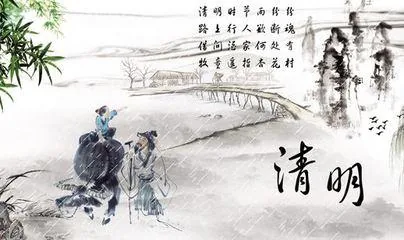
Qingming is one of the 24 solar terms of the traditional Chinese calendar, falling after the Spring Equinox and before Grain Rain. As the almanac puts it: “Fifteen days after the Spring Equinox comes Qingming, when all things are clean and bright.” The name — literally “clear and bright” — reflects the season, when temperatures rise, mists thin in southern China, sandstorms cease in the north, and the air turns clear.
Astronomically, Qingming begins when the sun reaches a celestial longitude of 15°, between 4 and 6 April.
“As the swallows return for the spring rites, and after the pear blossom falls, comes Qingming.” Following the rhythm of spring, around 5 April China welcomes another important traditional festival — Qingming. Folklore experts note that, as a festival of long history and lasting influence, the very name “Qingming” carries a deep “cultural code.” Its floral signs are said to be: “first the paulownia blossom, second the wheat flower, third the willow flower.”
Qingming takes its name from the “Qingming wind.” The Spring and Autumn–era text Guoyu records eight winds of the year, of which the “Qingming wind” belongs to the trigram Xun — that is, “rising yang energy as all things grow.” The Han-dynasty work Huainanzi likewise records that “fifteen days after the Spring Equinox, the Qingming wind arrives.”
The ancients named all eight winds of the year: the east wind Mingshu, the south wind Jing (also Kai), the west wind Changhe, the north wind Guangmo, the northeast wind Tiao (also Rong), the southeast wind Qingming, the northwest wind Buzhou, and the southwest wind Liang.
“The Qingming wind is one of the eight winds of the year — the warm, fresh wind that arrives after 45 days of the Tiao wind and 45 days of the Jing wind following the Winter Solstice. Around Qingming there is often fine drizzle and a gentle breeze — just the right time to plant crops, and the wind and rain of this season are welcomed by all.”