
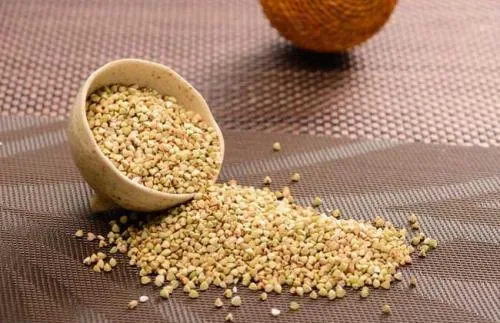
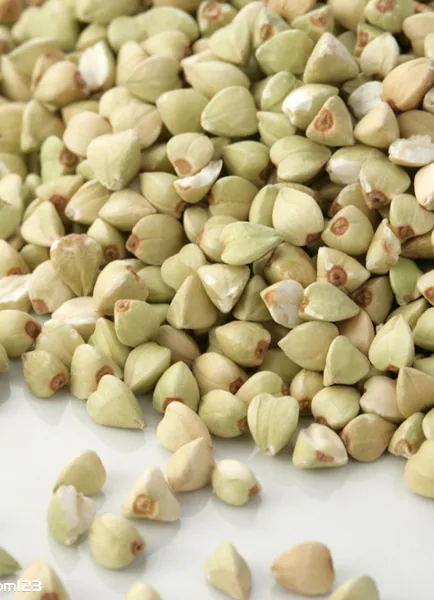
Traditional Chinese medicine holds that buckwheat is sweet, slightly sour and cool in nature, able to descend qi, relax the intestines and clear waste from the five organs. Once internal waste is cleared — when tonifying and eliminating are in balance — the body’s yin and yang come into balance too. So we recommend eating more buckwheat to clear waste from within the body: this not only helps with weight loss but also keeps illness at bay and supports good health.
There are many ways to eat buckwheat — buckwheat rice, buckwheat congee, buckwheat dumplings, buckwheat noodles, buckwheat pancakes, buckwheat hele noodles, “cat’s ear” soup and more. Of these, noodles made from buckwheat have the best texture and are most popular. Because buckwheat lacks extensibility and elasticity — it cannot be rolled into noodles, steamed into buns or griddled into cakes on its own — it is best to add 20–30% wheat flour to buckwheat flour for elasticity. You can also add a little buckwheat when cooking white or millet rice, or grind buckwheat, wheat, soybeans and sesame into a cooked powder and drink it with boiling water each day for the same descending-qi, intestine-soothing effect.
Buckwheat suits the old, the weak, women and children, and is especially suitable for people with diabetes. It also has some dietary-therapy effect for today’s “diseases of affluence” such as high blood pressure, high blood lipids and arteriosclerosis. Older people who occasionally eat buckwheat noodles may help lower their blood lipids and pressure — about once every three or four days, around 100 g each time, will have some health benefit.
Buckwheat protein is rich in lysine, its trace elements such as iron, manganese and zinc are more abundant than in ordinary cereals, and it has plenty of dietary fibre — about ten times that of ordinary refined rice — so buckwheat has good nutritional and health value. It is rich in vitamin E and soluble dietary fibre, and also contains niacin and rutin. Rutin can lower blood lipids and cholesterol, soften blood vessels, protect eyesight and help prevent cerebral haemorrhage. Its niacin promotes metabolism, strengthens detoxification, dilates small blood vessels and lowers blood cholesterol. Its rich magnesium promotes fibrinolysis, dilates vessels, inhibits clot formation for an anti-thrombotic effect, and helps lower serum cholesterol.
Some of buckwheat’s flavonoid components also have antibacterial, anti-inflammatory, cough-relieving, asthma-soothing and phlegm-resolving effects — hence buckwheat’s nickname, the “anti-inflammatory grain.” These components also help lower blood sugar. Buckwheat is sweet and neutral in nature, said to strengthen the spleen and qi, whet the appetite, relax the intestines and aid digestion.